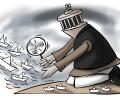
A combination of externalities such as global trade wars and slowing growth, continuing glitches in accessing offsets under the GST regime, which has created a liquidity crunch for smaller exporters, and the growing competitiveness of smaller countries are causing the slowdown.

The independent institute advising the PM on jobs seems to have missed the point that the challenge is to create net additional jobs, says Mahesh Vyas.

The Aadhaar-enabled payment system, or AEPS, allows consumers who don't have smartphones or debit cards to perform basic banking transactions like cash deposit, cash withdrawal, intrabank or interbank fund transfer, balance enquiry and obtaining a mini statement through biometric authentication at micro-ATMs.
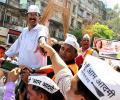
These elections will be remembered for the AAP and Arvind Kejriwal, feels Neeta Kolhatkar.

Oscar tips for Priyanka Chopra!
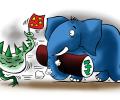
Daniel Wu, chairman of the Asian Bankers Association (ABA), says there is merit in merging some of the less efficient public sector banks in the country.

'As the weeks passed, we saw our group changing.' 'It was becoming a microcosm of the world outside -- a world we had hoped would never intrude into this space,' says Veenu Sandhu.

'It goes without saying that Air India has now no imaginable reason to exist.'

'Investigation directorates have intensified actions in detecting serious irregularities.' 'They are seriously handicapped because of non-availability of manpower.'

'Karna is the greatest warrior in the Mahabharata -- in fact, Arjuna is a nobody in front of Karna.' 'But Arjuna had a better advisor in Krishna than Karna.' 'Karna failed because he listened to the wrong advice given by Salya.' 'It just shows wrong advisors can land even the mighty in trouble.'

No new ideas, please, we are Indian. Seventeen years into the 21st century, we are still fixated by the ideas of the 20th century.

'Life will not improve overnight; it will happen in a gradual manner.'

While hybrids, CNG and biofuels found favour in 2018 among many carmakers including Maruti Suzuki, Mercedes-Benz, Toyota and Honda, others such as M&M and Tata Motors have shown full faith in electric vehicles.

'No one institution can cleanse it: Not the courts, government or activists.' 'And least of all the Indian Police Service,' argues Shekhar Gupta.
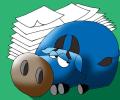
Earnings growth is expected to accelerate as lingering toxic effects of note ban ease off and GST settles down. However, stock valuations are high and that means market is also overdue for correction, says Devangshu Datta.

A tightrope walk ahead, especially as govt's fiscal deficit has already reached 99% of full-year estimates

Awful religious practices need to be abolished. But through social and political reformers, not by courts, argues Shekhar Gupta.

The evolving RBI-government relationship, a reversal in the interest rate cycle and return to profitability will dominate bankers' conversation this year, says Tamal Bandyopadhyay.

A political party's manifesto is the first stage of building a compact with the voters in any governance plan. If that compact is dependent on a document that reeks of fiscal imprudence and lacks credibility, it is a serious setback to the country's democracy and governance, says A K Bhattacharya.

The railways is expecting a revenue of Rs 1,84,820 crore during the current financial year (FY17).

'The non-vegetarian share of the population fell from 75 to 71 per cent between 2004 and 2014, no doubt in anticipation of the lotus blooming.' 'Three years of saffron authoritarianism may have thinned the non-vegetarian ranks even more,' says Sunanda K Datta-Ray.

Liquidity pushed benchmark indices 22% higher to become the best performing equity market globally

The state has allowed industrial units in special economic zones (SEZs) to lay off workers without government's sanction, regardless of the number of workers
'The Chinese have taken to telling their Indian interlocutors to bear in mind the 5:1 disparity in the sizes of the two economies.' 'The message from Beijing, says T N Ninan, is clear: Acknowledge superior Chinese power, and behave accordingly.'

The Union Budget seems to have elicited a starkly opposite view from rural India compared to urbanites, says Mahesh Vyas.
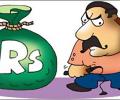
While Modi must worry about the electoral backlash of bailing out state-owned banks, China's communist rulers face fewer constraints.
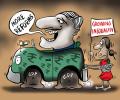
A new study shows that the bottom half of the population enjoyed only 15 per cent of national income in 2013-14, down sharply from 24 per cent in the early 1980s.

In refusing to accept its failure, the government has sowed the seeds of further damage: by keeping India short of cash; reducing the headroom for responses to seasonal spikes in cash demand; and increasing the chances that groups will panic at temporary cash shortages, says Mihir Sharma.

Lower interest rates needed to boost manufacturing, officials say.

The I-T department will rely on data analytical tools and run models to separate black money holders and genuine taxpayers based on the large data base being shared by banks.
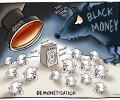
Amid persistent fear of prosecution and penalty, people across income classes are looking for ways to do away with stacks of higher denomination currency.

The period of assessment of these defaulters range from 1989-90 to 2013-14.
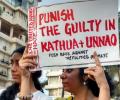
'They have no other agenda, but to perpetuate hate.' 'They have destroyed the economy and polity and they survive only on hate.' 'They think through hatred, they can mobilise the large chunk of Hindu votes.'

Legal experts are not sure if threat of confiscation of property will be deterrent enough for fleeing offenders
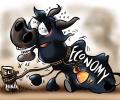
While good news from several quarters has been trickling in, El Nino might be a dampener, says T N Ninan.

If the states do not chip in with better governance procedures in the setting up of new businesses, providing electricity connections, enforcing contracts, issuing construction permits or registering property, there is little the Centre can do on its own to quickly move India up the index on ease of doing business, says A K Bhattacharya.

'One problem with machine learning is that extensive human inputs are required.' 'This is both an expense and time consuming.' 'If AIs can do this on their own, the process may become more efficient,' says Devangshu Datta.

Tariff cap offers Ola relief in battle with Uber. Though it might hurt their earnings, Ola believes the Karnataka High Court's judgement levels the playing field with Uber.

'The situation in the country is very scary.' 'There is an increasing attack on the Constitutional democratic rights of our people.'

The party's gamble to go in for early elections paid rich dividends.
 © 2026 Rediff.com - Advertise with us - Disclaimer - Privacy Policy - Sitemap - Feedback - About us - Terms of use - Grievances